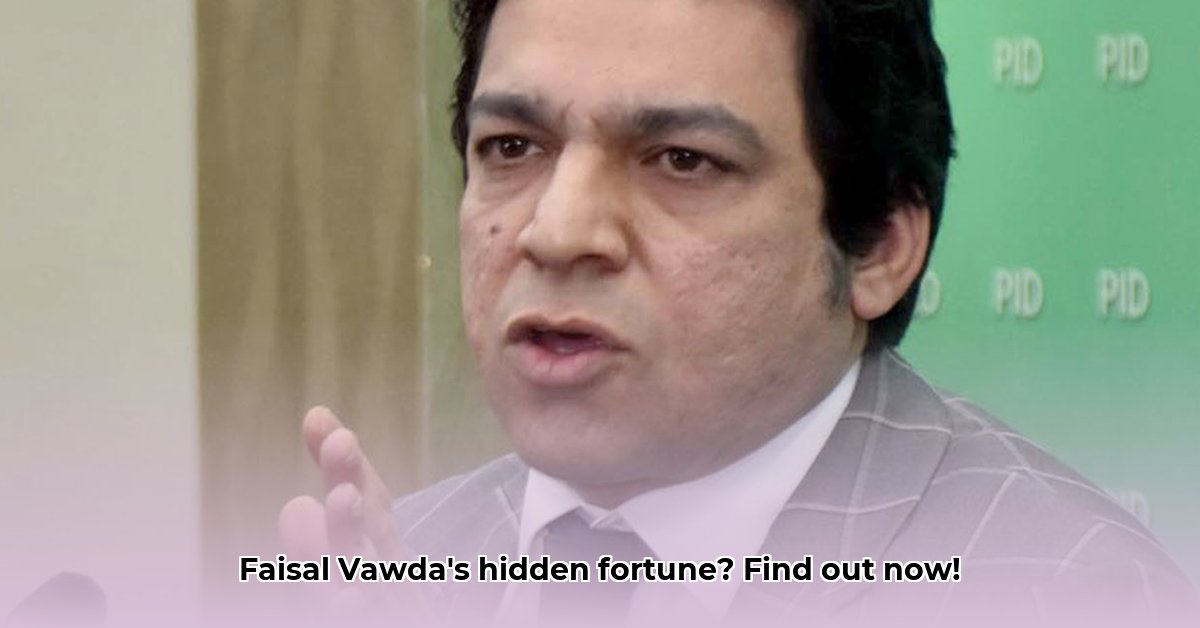
Faisal Vawda's career in Pakistani politics, marked by a rapid ascent within the Pakistan Tehreek-e-Insaf (PTI) party followed by a dramatic downfall, leaves a lingering question: What is his true net worth? Determining this, however, proves remarkably difficult, highlighting the pervasive lack of transparency surrounding the finances of Pakistani politicians. This article explores Vawda's career, the challenges of assessing his wealth, the controversy surrounding his dual citizenship, and the broader implications for Pakistani politics. For comparison, see how difficult it is to determine the net worth of other public figures like Daler Mehndi's net worth.
A Career Defined by Ascent and Fall
Vawda's political trajectory was meteoric. He leveraged his pre-political business background to rapidly gain influence within the PTI, holding significant ministerial positions. His business ventures, however, remain shrouded in some mystery, making it hard to fully assess their contribution to his personal wealth. This lack of transparency, while not unique to Vawda, raises questions about potential conflicts of interest and the influence of political connections on financial gains. How much did his political influence impact his business success, and vice-versa? This remains a crucial area needing further investigation.
His political career, though marked by initial success, was ultimately cut short by controversy. Legal battles and his eventual expulsion from the PTI raise questions about the true extent of his financial success, and whether his political affiliations directly benefited his wealth. The correlation between his political advancements and business dealings remains a key unanswered question.
The Elusive Net Worth: A Transparency Deficit
Accurately determining Faisal Vawda's net worth is exceptionally difficult. Pakistan lacks robust regulations mandating transparent financial disclosures from its political leaders, creating a significant obstacle for investigative journalists and the public alike. This opacity isn't unique to Vawda; it's a systemic issue affecting the assessment of wealth for many Pakistani politicians.
Attempts to estimate his net worth rely on indirect methods, such as examining available information on his business interests and property holdings. However, without comprehensive and verifiable financial data, any estimate remains inherently speculative. While some unverified online sources offer wide-ranging figures (examples: $5 million - $50 million), these lack credible sources and should be treated with extreme caution. The lack of transparency raises a critical question: How can citizens hold their leaders accountable without access to their financial records?
The Dual Citizenship Controversy and its Aftermath
A pivotal moment in Vawda's career was the controversy surrounding his dual citizenship. This legal challenge led to his disqualification from holding public office, highlighting ambiguities within Pakistan's laws concerning dual citizenship and its implications for political eligibility. The legal battle itself likely incurred substantial expenses. His loss of public office also affected potential income and business opportunities. This dual citizenship issue raises another key question: What influence does the legal and political uncertainty surrounding dual citizenship have on the financial status of politicians in Pakistan?
Political Ramifications and the Need for Reform
Vawda's removal from the PTI sent shockwaves through the party, highlighting internal power struggles and the precarious nature of political alliances. His expulsion fueled debate about accountability and transparency, not just within the PTI, but across the broader political landscape. The lasting impact on Pakistani politics is undeniable.
The difficulty in assessing Vawda's net worth underscores a critical need for reform. Stricter regulations and stronger enforcement of existing laws are essential. A culture of greater transparency is crucial not just for evaluating individual politicians' wealth, but for bolstering public trust in the integrity of the democratic process. Only with increased accountability can we hope to address the pervasive lack of transparency and ensure that Pakistan's political leaders are accountable to its citizens.
Conclusion: Toward Greater Accountability
The case of Faisal Vawda serves as a compelling illustration of the obstacles hindering transparency and accountability in Pakistani politics. The inability to readily determine his net worth, while specific to him, spotlights a broader systemic problem. The urgent need for comprehensive reform is clear. Strengthened regulations, improved enforcement, and a greater commitment to transparency are essential for restoring public trust and ensuring that those who govern are accountable to the people they represent.